NIPPON NATURALS
日本ナチュラルズ
NIPPON NATURALS
日本ナチュラルズ
NIPPON NATURALS
日本ナチュラルズ
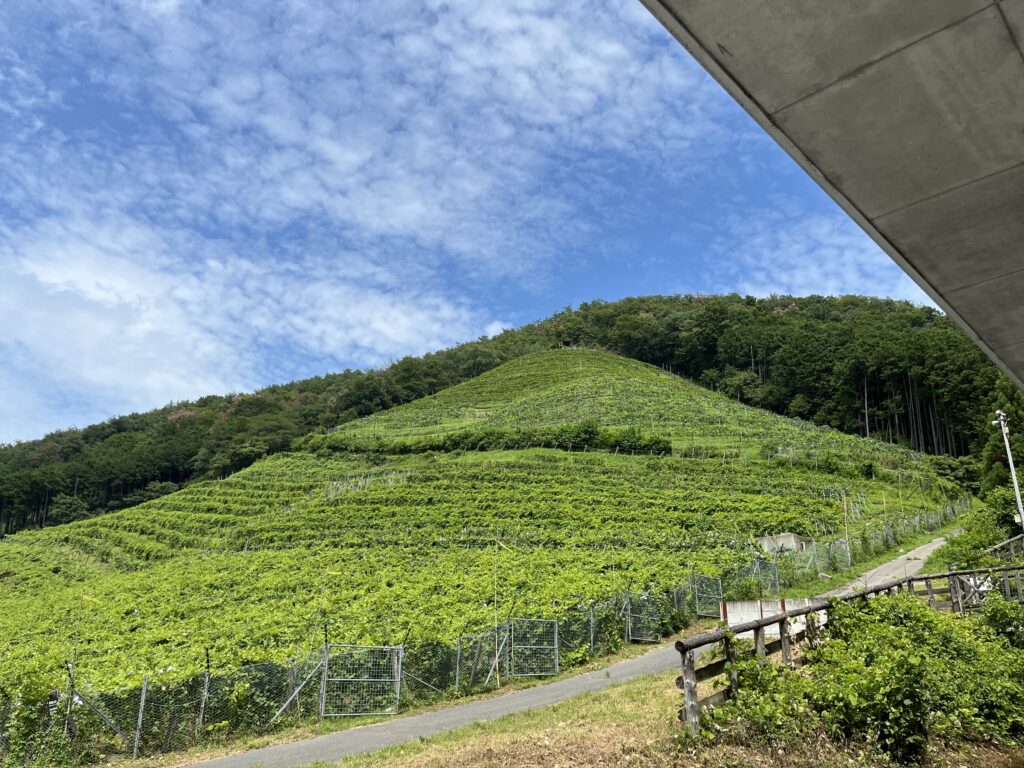
While Japan is internationally celebrated for fine whisky, sake and shochu, it also has a winemaking tradition that stretches back nearly 1,600 years. In recent decades, wine culture has flourished across the country, with over 400 wineries now crafting unique, terroir-driven wines. Supported by both government initiatives and private investment, Japan’s wine industry is rapidly evolving—and gaining global attention.
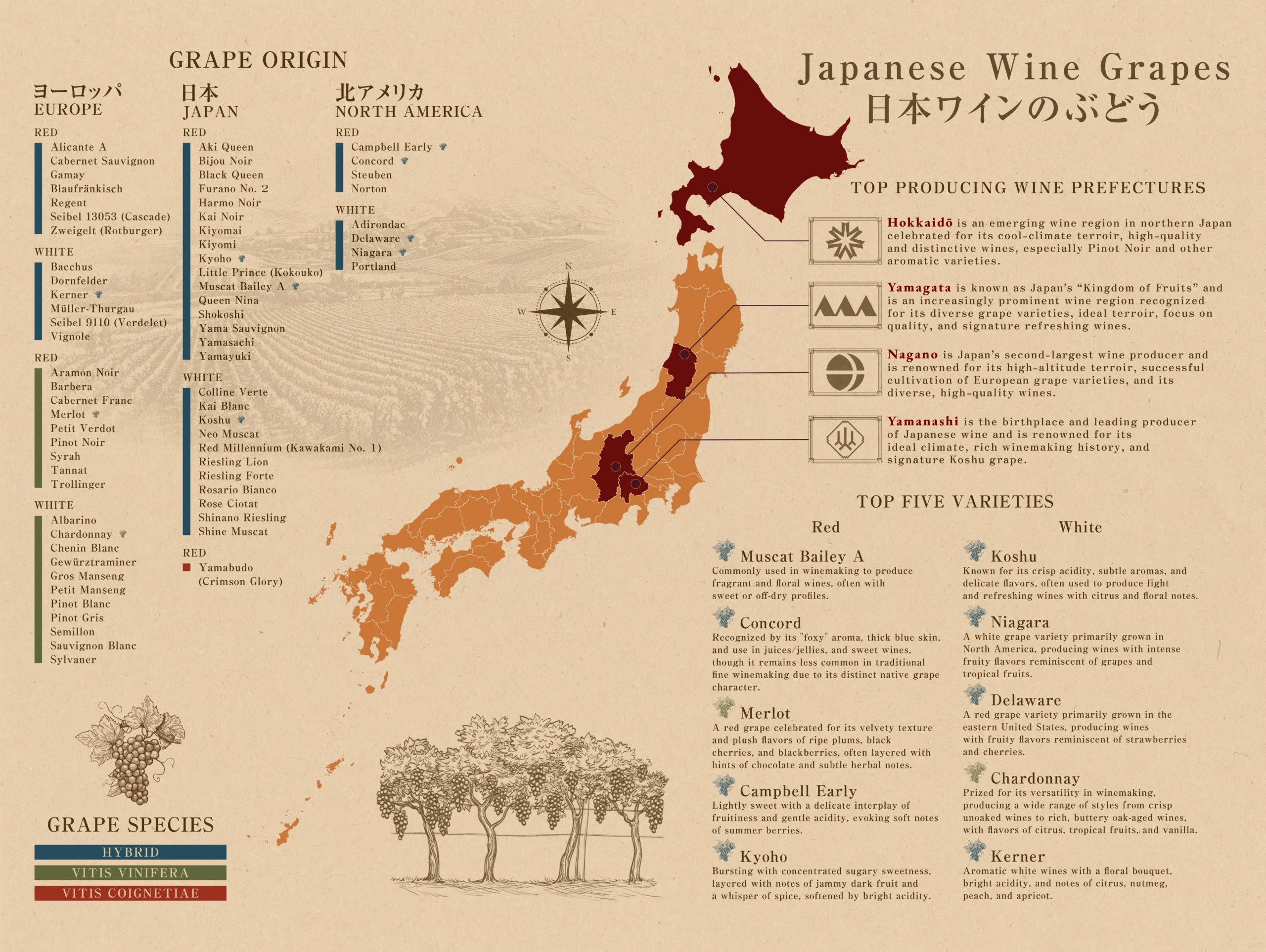
Though grapes have been cultivated in Japan since at least the 8th century, winemaking began in earnest in the late 19th century. The country’s first commercial winery opened in Yamanashi Prefecture in 1874, followed by Japan’s first private winery in 1877. These early pioneers trained in France, laying the groundwork for the modern Japanese wine industry. One of the key figures, Zenbei Kawakami, developed grape hybrids suited to Japan’s climate—most famously, Muscat Bailey A, a red variety still widely planted today.
Japan’s wine identity took a major step forward in the 1980s with a surge in wine consumption and a new openness to European vinifera grapes. Modern wineries invested in cutting-edge technology, global partnerships, and training programs abroad. Since 2000, stricter quality standards and geographic protections—known as Geographical Indications (GIs)—have helped raise the profile of wines made from Japan-grown grapes.
From snowy northern Hokkaido to the temperate mountains of central Honshu, Japan’s diverse climate makes for a wide range of wine styles. Five wine regions currently hold GI status: Yamanashi, Nagano, Yamagata, Hokkaido, and Osaka. Yamanashi, just west of Tokyo, remains the heart of Japan’s wine country and is home to the Koshu grape—an ancient, native white variety celebrated for its crisp, citrusy wines. Nagano’s alpine vineyards are known for Merlot, Chardonnay, and Syrah, while Hokkaido is emerging as a cool-climate powerhouse, producing elegant Pinot Noir and aromatic whites.
Koshu is Japan’s signature white grape and one of its oldest. Believed to have arrived via the Silk Road over a millennium ago, it’s adapted beautifully to Japan’s challenging growing conditions. Today, it’s used to make a range of styles—from refreshing still whites to sparkling and even skin-contact “orange” wines. Among reds, Muscat Bailey A is beloved for its soft tannins and strawberry notes, and varieties like Merlot, Zweigelt, and even Pinot Noir are finding their place in Japan’s evolving vineyards.
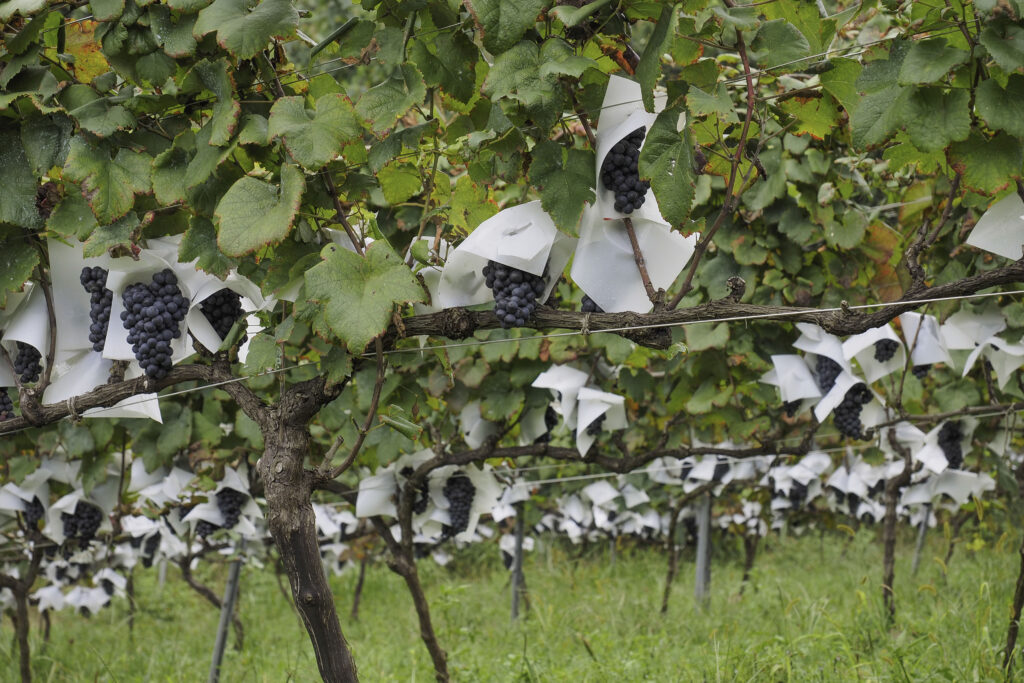
Although many vineyards are still planted with table grapes, a growing number of wineries are cultivating wine grapes and managing their own estate vineyards. Most Japanese wineries are small, artisanal producers crafting less than 100,000 liters a year—making their wines rare and distinctive. As interest in Japanese wine rises abroad, these boutique wineries are gaining recognition for their elegance, precision, and harmony with food.
For American wine lovers, Japan offers something truly different: a blend of ancient heritage, modern technique, and wines that reflect the country’s unique geography and dedication to craftsmanship. Whether you’re a seasoned enthusiast or a curious newcomer, Japanese wine is ready to surprise and delight.